
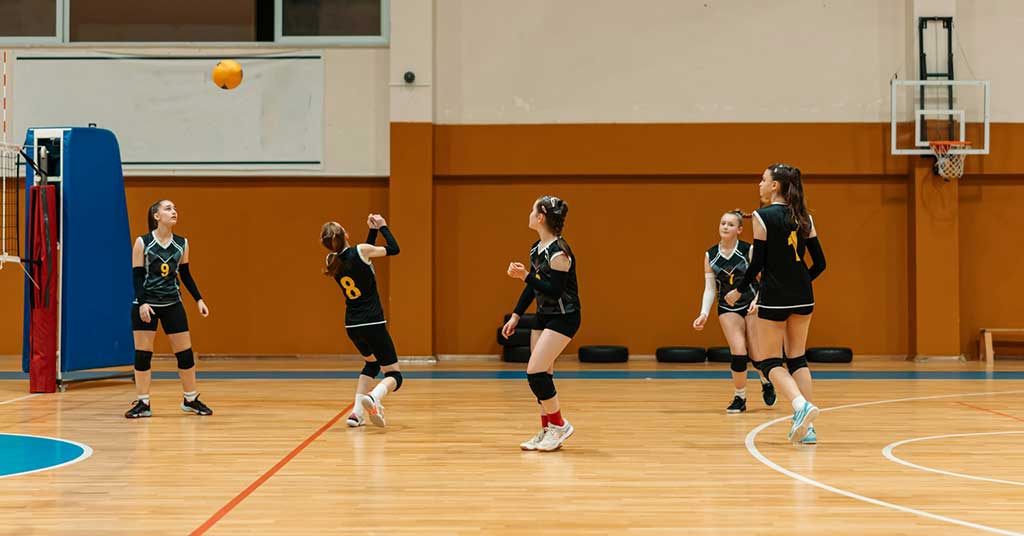
A knee-jerk reaction to pressure can tank your business fast

We were down by 14 points at halftime and the team seemed defeated. Our star player was frustrated. Her shots weren’t going in and neither were her teammates’.
As a coach, I was unfazed. Having been irritated with the refereeing in the first couple of games, I had decided that my fuming wasn’t going to make the situation any better. I could see that the team was tense and my anxiety was putting stress on the players.
I knew we were playing a good team, but we still had a chance if only the girls would loosen up and start playing as a team. I came to understand that how I responded in that moment would shape how they played.
Basketball teams aren’t much different than organizations. We get ourselves into tough spots. Perhaps it’s cash flow issues, people problems, communication, or competition challenges. We seize up. I’ve been there! How leaders react under pressure sets the tone for what happens next.
As team leaders, we become tense, freak out, jump all over the place and make a lot of noise because we feel we need to wake up our team to the severity of the situation. That reaction makes things worse.
You see it play out the same way in business.
A study of over 700 workers by the University of Warwick found that happy employees were 12 per cent more productive than others, while unhappy employees were 10 per cent less productive. This research is still widely cited today and aligns with what many organizations report.
Studies have also shown that we need a certain amount of stress to have productive employees. This stress is often suitable when we place an emphasis on achieving realistic results in a timely manner. In cases like this, employees often respond well and not only feel good about their success, but tend to produce the required results. When stress levels—either externally or self-imposed—are too high, productivity drops significantly. Clear, focused pressure can help. Constant, unfocused pressure often does the opposite.
What happens next is almost comical. Our staff crawl under their desks with their heads down or head for the door with colds, the flu, sick days, or holidays. They get out of our way and hope to come back when the office attitude changes.
As leaders, we’re left thinking we have to do it all ourselves, putting in extra hours trying to figure things out and get through the next few days, weeks, or months. At that point, it’s usually not the workload that’s the issue.
It comes down to how we handle pressure.
More often than not, the pressure we put on ourselves to get jobs done, to be successful, make money, or to be perfect, is incredible. We place unrealistic expectations on what we can get done.
Frequently, we have no concrete plans to achieve our goals, and the result is often failure and significant disappointment. We start to feel irritated with ourselves and others because we aren’t producing, and everyone around us can sense it. That tension spreads quickly through a team.
For many Canadian businesses, especially small and mid-sized companies dealing with ongoing labour shortages and retention challenges, getting this right is not optional. Since the pandemic, a lot of workplaces have shifted to more flexible or hybrid setups, and that can make it harder to keep everyone on the same page. People are working in different places, communication is constant, and expectations don’t seem to slow down. It doesn’t take much for things to become scattered.
In that kind of environment, a few simple changes make a real difference. Being clear about what matters this week, reducing unnecessary meetings, and making sure people understand where the business stands can go a long way toward restoring focus and momentum.
It’s true that businesses need to make a profit and need cash to ensure their longevity. However, I know of many companies where the culture of the business is focused solely on profits and making money. These businesses often don’t retain their employees for long because when money is the only reason for existence, the satisfaction of working quickly disappears. Not only do employees burn out, but because the focus is on profits and not the customer, the long-term success of the business is often in question.
As coaches, we were able to get our team to relax, and as they did, the ball started going in the hoop. We chipped away at the score, eventually winning by three points.
Managing people is as much about managing emotions and team dynamics as it is about focusing on the results. As leaders, we set the tone. Get that right, and performance follows. Get it wrong, and no amount of effort will make up the difference.
David Fuller is a Commercial and Business Realtor with a strong reputation as an award-winning business coach and author of
Explore more on Leadership, Business Productivity, Stress
The views, opinions, and positions expressed by our columnists and contributors are solely their own and do not necessarily reflect those of our publication.
Troy Media empowers Canadian community news outlets by providing independent, insightful analysis and commentary. Our mission is to support local media in helping Canadians stay informed and engaged by delivering reliable content that strengthens community connections and deepens understanding across the country.

