
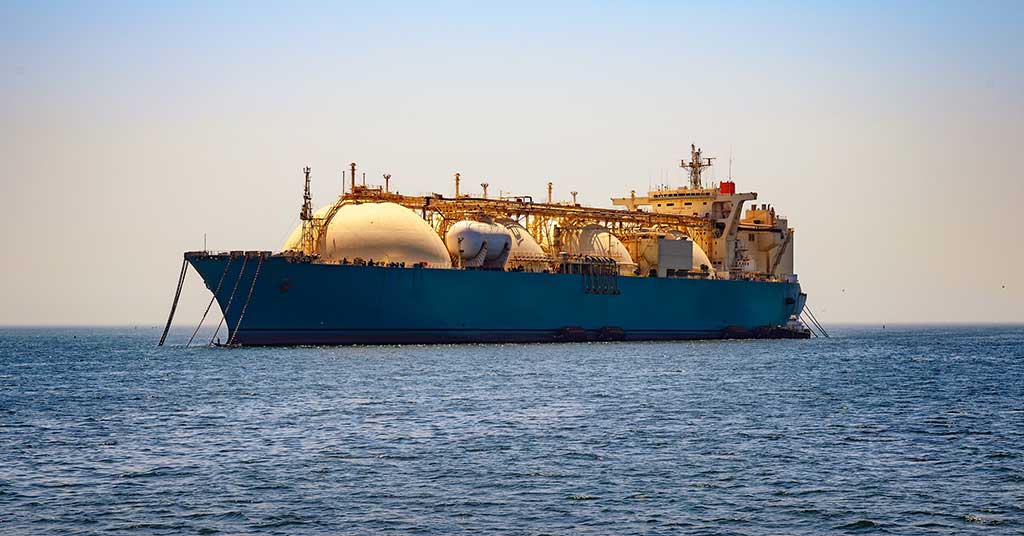
Without decisive action, Canada risks missing out on a generational opportunity

For decades, Canada has relied almost exclusively on the United States to buy our natural gas exports. We are one of the world’s top natural gas exporters, selling nearly half of our total natural gas production each year, but about 99 percent of those exports go to a single customer south of our border.
This trading relationship has been reliable, even though it has meant selling our natural gas at a lower price. But things are changing.
A good business has more than one customer, and over the past decade our biggest customer has become the largest Liquefied Natural Gas (LNG) exporter on the planet.
But Canada has taken a major step forward. LNG Canada’s first shipment to international markets marks a historic breakthrough—it’s the country’s largest private investment and puts Canada on the map as a global supplier of LNG.
This achievement deserves celebration. It demonstrates that Canada can build and deliver major energy infrastructure, unlocking economic opportunities for Indigenous Nations, British Columbians, and Canadians across the country. Just as the TransMountain pipeline expansion diversified our global customer base, boosted our GDP, and enabled production growth, LNG exports can do for our natural gas sector. Natural gas royalties from LNG Canada alone are projected to contribute $23 billion to British Columbia’s government over its 40-year lifespan. Building a facility of similar scale to LNG Canada is estimated to create over 35,000 jobs during construction and add up to $4.5 billion to our national GDP annually. It’s a glimpse of what’s possible.
But we can’t stop here.
Without decisive action to scale up LNG, Canada risks missing out on a generational opportunity to secure economic sovereignty and meet rising global energy demand.
Global demand for LNG is surging. Shell forecasts a 60 per cent increase by 2040, driven by Asian economic growth, the decarbonization of heavy industry and transport, and new energy demands from artificial intelligence. Most G7 leaders have called for a full ban on Russian energy imports, and countries around the world are actively seeking secure, stable suppliers. Canada, as the fourth-largest oil producer and fifth-largest natural gas producer, is well-positioned to help fill that gap.
So why haven’t we? Despite our resource wealth, Canada lags on infrastructure and policy. While others sprint for global contracts, we’re stuck in red tape. Our permitting system is slow, uncertain, and hostile to investment. That must change.
The government’s two-year approval target is a step forward, as is the recent work our Prime Minister and Energy Minister Hodgson are doing to promote energy trade in Poland and Germany, including LNG. But deeper reforms are needed to create a clear, competitive, investor-friendly system that accelerates development.
We must also prioritize infrastructure investment. With strategic investments in pipelines, LNG terminals, and port capacity, we can connect our vast natural gas reserves to high-demand markets across Asia, Europe, and beyond.
Equally crucial is diversification. The U.S. will remain a vital customer, but relying on one market is no longer tenable. Japan, Europe, and emerging Asian economies are actively seeking partners—and Canada must be ready to meet them with reliable supplies and long-term contracts.
Indigenous participation will be key to success. Canada’s emerging LNG export industry is demonstrating what’s possible with the Haisla Nation’s Cedar LNG, the world’s first Indigenous majority-owned LNG project, along with Woodfibre LNG being advanced in partnership with the Squamish Nation, and Ksi Lisims LNG being co-developed with the Nisga’a Nation. Expanding the LNG sector offers an opportunity to advance reconciliation meaningfully, through ownership, jobs, and long-term prosperity.
This is a pivotal moment. The first phase of LNG Canada must be just the start. The world needs our energy. It’s time to deliver.
Lisa Baiton is the president and CEO of the Canadian Association of Petroleum Producers.
Explore more on LNG, Natural Gas, Energy sector, Pipelines, Canadian economy, Energy security
The views, opinions, and positions expressed by our columnists and contributors are solely their own and do not necessarily reflect those of our publication.
Troy Media empowers Canadian community news outlets by providing independent, insightful analysis and commentary. Our mission is to support local media in helping Canadians stay informed and engaged by delivering reliable content that strengthens community connections and deepens understanding across the country.

